Salmon Panang Curry
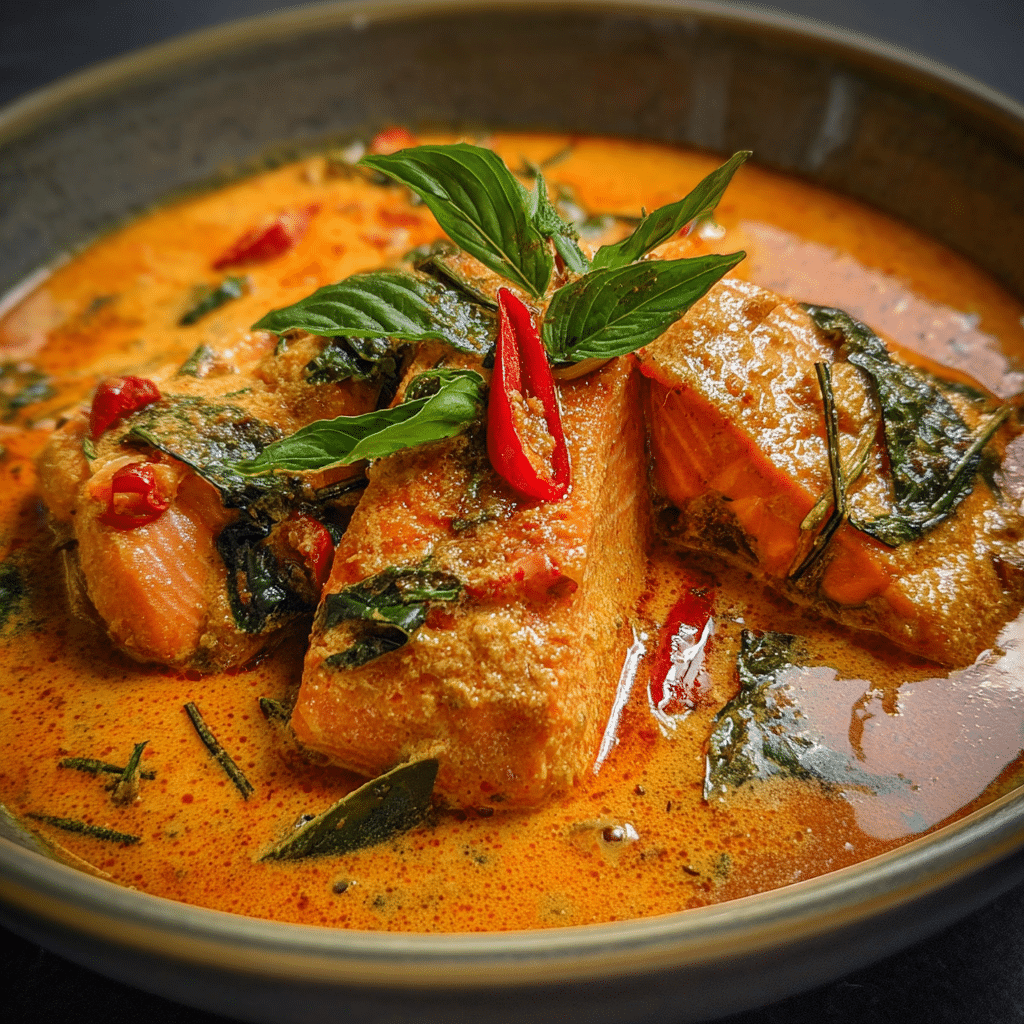
If you’ve ever craved a dish that perfectly blends creamy coconut milk, bold spices, and tender fish, then this Salmon Panang Curry recipe is your new culinary best friend. Discover a flavorful Salmon Panang Curry recipe that’s easy to make at home with rich spices and creamy coconut milk that create a beautiful balance of heat, sweetness, and umami. This classic Thai-inspired meal will fill your kitchen with delightful aromas and bring a vibrant, satisfying meal to your table in no time.
Why You’ll Love This Recipe
- Authentic Flavor: This recipe captures the true essence of Panang curry with perfectly balanced spices and creamy coconut milk.
- Quick and Easy: Made with simple ingredients and straightforward steps, perfect for busy weeknights or casual dinners.
- Healthy and Nutritious: Salmon is packed with omega-3 fatty acids, making this curry both delicious and good for you.
- Customizable: Adapt this dish to suit your spice preference or dietary needs without losing its signature taste.
- Impresses Guests: Vibrant colors and complex flavors make it a great dish to serve for special occasions or dinner parties.
Ingredients You’ll Need
Gathering the right ingredients is the first step to making an amazing Salmon Panang Curry. Each ingredient plays an important role in achieving the dish’s creamy texture, rich color, and spicy yet slightly sweet flavor.
- Fresh salmon fillets: The star of the dish, offering a tender, flaky texture and delicate taste.
- Panang curry paste: A fragrant blend of red chili, lemongrass, galangal, and spices that forms the flavorful base.
- Coconut milk: Provides a rich, creamy body and balances the heat with a natural sweetness.
- Fish sauce: Adds essential salty umami depth without overpowering the other flavors.
- Brown sugar or palm sugar: Adds a subtle sweetness to complement the curry spices.
- Kaffir lime leaves: Infuse a fresh, citrusy aroma unique to Thai curries.
- Basil leaves: Fresh Thai basil adds a peppery, herbal note that brightens the dish.
- Vegetable oil: For sautéing the curry paste and developing flavor.
- Optional chili peppers: For extra heat if you like your curry spicy.
Variations for Salmon Panang Curry
One of the best parts about making Salmon Panang Curry is how easily you can tailor it to your tastes or what you have on hand. Feel free to experiment with these variations to make it truly your own!
- Protein swaps: Replace salmon with shrimp, tofu, or chicken for a tasty twist.
- Dairy-free option: Use light coconut milk or add a splash of almond milk for a lighter curry.
- Extra veggies: Add bell peppers, baby corn, or green beans to boost the nutrition and color.
- Milder heat level: Reduce or skip the chili peppers and adjust curry paste quantity for a more mild curry.
- Make it gluten-free: Just ensure your fish sauce and curry paste are gluten-free labeled.

How to Make Salmon Panang Curry
Step 1: Prepare Your Ingredients
Start by cutting your fresh salmon fillets into bite-sized chunks. Tear the kaffir lime leaves into smaller pieces to release their fragrance and finely chop your chili peppers if you want extra heat.
Step 2: Fry the Curry Paste
Heat a tablespoon of vegetable oil in a large pan over medium heat. Once hot, add the Panang curry paste and fry it for 1-2 minutes until fragrant. This step blooms the spices and intensifies the flavor.
Step 3: Add Coconut Milk
Pour in the coconut milk gradually, stirring to combine with the curry paste. Let it simmer gently for 5 minutes to develop a creamy, aromatic sauce base.
Step 4: Season the Curry
Stir in fish sauce, brown or palm sugar, and kaffir lime leaves. Taste and adjust seasoning, balancing salty, sweet, and spicy elements as you prefer.
Step 5: Cook the Salmon
Add the salmon pieces to the pan carefully. Allow them to cook gently in the curry sauce for 6-8 minutes or until just cooked through, maintaining the fish’s tender texture.
Step 6: Finish with Fresh Basil
Just before serving, stir in fresh Thai basil leaves to add a punch of herbal freshness that complements the rich curry perfectly.
Pro Tips for Making Salmon Panang Curry
- Use fresh curry paste: For the best flavor, use freshly made or high-quality store-bought Panang curry paste.
- Don’t overcook the salmon: Salmon cooks quickly and can become dry, so watch it carefully to keep it moist and flaky.
- Adjust spice level: Add chili slowly and taste as you go to find your ideal heat balance.
- Simmer gently: Keep the curry on low heat to prevent coconut milk from splitting and to preserve the creamy texture.
- Fresh herbs matter: Adding basil at the end brightens the flavor without losing its vibrant green color.
How to Serve Salmon Panang Curry
Garnishes
Finish your Salmon Panang Curry with a sprinkle of fresh Thai basil leaves and a few thin slices of red chili or kaffir lime zest to add color and a burst of fresh aroma.
Side Dishes
Serve alongside fluffy steamed jasmine rice or fragrant coconut rice to soak up the rich curry sauce. A side of crisp cucumber salad or pickled vegetables complements the richness beautifully.
Creative Ways to Present
For an elegant twist, serve your Salmon Panang Curry in individual bowls garnished with microgreens and a wedge of lime for squeezing. You can also offer it as a festive centerpiece paired with warm naan or roti bread for dipping into the sauce.
Make Ahead and Storage
Storing Leftovers
Keep any leftover Salmon Panang Curry in an airtight container in the refrigerator for up to 2 days to maintain freshness and flavor.
Freezing
This curry freezes well; transfer cooled leftovers to freezer-safe containers and freeze for up to 1 month. Thaw overnight in the refrigerator before reheating gently.
Reheating
Reheat on low heat in a saucepan, adding a splash of water or coconut milk if the sauce has thickened too much. Avoid microwaving at high heat, as this can dry out the salmon.
FAQs
Can I use frozen salmon for Salmon Panang Curry?
Yes, frozen salmon can be used as long as it is fully thawed before cooking to ensure even cooking and tender texture.
How spicy is Salmon Panang Curry?
The heat level depends on the amount of curry paste and fresh chili you add; it can be mild or spicy based on your preference.
Is Panang curry paste gluten-free?
Many commercial curry pastes are gluten-free but always check the label to confirm, or make your own paste to be sure.
Can I make this dish vegan?
You can substitute salmon with tofu and use vegan fish sauce alternatives to create a vegan-friendly Panang curry.
What can I use instead of kaffir lime leaves?
If unavailable, you can substitute with a small amount of lime zest or a few drops of lime juice to mimic the citrus aroma.
Final Thoughts
Making Salmon Panang Curry at home is a rewarding experience that combines ease, flavor, and nutrition in every bite. Once you try this recipe, it will quickly become a favorite go-to when you want something comforting yet impressive. So grab your ingredients, have fun cooking, and enjoy a cozy meal full of vibrant Thai flavors!
Related Posts
PrintSalmon Panang Curry

Salmon Panang Curry is a flavorful Thai-inspired dish that features tender salmon cooked in a rich, creamy sauce made from Panang curry paste and coconut milk. This recipe balances bold spices, subtle sweetness, and aromatic herbs to provide a vibrant and satisfying meal that’s quick and easy to prepare at home.
- Prep Time: 10 minutes
- Cook Time: 15 minutes
- Total Time: 25 minutes
- Yield: 4 servings 1x
- Category: Main Course
- Method: Sautéing
- Cuisine: Thai
- Diet: Gluten Free
Ingredients
Main Ingredients
- 400g fresh salmon fillets, cut into bite-sized chunks
- 2 tablespoons Panang curry paste
- 400ml coconut milk
- 1 tablespoon fish sauce
- 1 tablespoon brown sugar or palm sugar
- 3 kaffir lime leaves, torn into smaller pieces
- 1/2 cup fresh Thai basil leaves
- 1 tablespoon vegetable oil
- Optional: 1-2 fresh chili peppers, finely chopped for extra heat
Instructions
- Prepare Your Ingredients: Cut fresh salmon fillets into bite-sized chunks. Tear kaffir lime leaves into smaller pieces to release their fragrance. Finely chop chili peppers if using for added heat.
- Fry the Curry Paste: Heat vegetable oil in a large pan over medium heat. Add Panang curry paste and fry for 1-2 minutes until fragrant, blooming the spices and intensifying flavor.
- Add Coconut Milk: Gradually pour in coconut milk, stirring continuously to blend with the curry paste. Let the mixture simmer gently for 5 minutes to develop a creamy, aromatic sauce base.
- Season the Curry: Stir in fish sauce, brown or palm sugar, and kaffir lime leaves. Taste and adjust seasoning to balance salty, sweet, and spicy flavors according to preference.
- Cook the Salmon: Carefully add salmon pieces to the pan. Simmer gently in the curry sauce for 6-8 minutes or until the salmon is just cooked through, preserving the fish’s tender texture.
- Finish with Fresh Basil: Just before serving, stir in fresh Thai basil leaves to add a bright, herbal freshness that complements the rich curry.
Notes
- Use fresh or high-quality store-bought Panang curry paste for best flavor.
- Watch the salmon carefully to avoid overcooking and keep it moist and flaky.
- Adjust the spice level slowly by adding chili peppers to your heat preference.
- Simmer the curry gently to prevent coconut milk from splitting and maintain a creamy texture.
- Add fresh basil at the end to keep its bright color and aromatic quality.
- Substitute salmon with shrimp, tofu, or chicken for different protein options.
- Ensure fish sauce and curry paste are gluten-free if needed.
- For vegan versions, use tofu and vegan fish sauce alternatives.
- If kaffir lime leaves are unavailable, use lime zest or a few drops of lime juice as a substitute.
Nutrition
- Serving Size: 1 serving
- Calories: 400 kcal
- Sugar: 6 g
- Sodium: 800 mg
- Fat: 28 g
- Saturated Fat: 20 g
- Unsaturated Fat: 6 g
- Trans Fat: 0 g
- Carbohydrates: 10 g
- Fiber: 2 g
- Protein: 28 g
- Cholesterol: 70 mg
Keywords: Salmon curry, Panang curry, Thai curry, coconut milk curry, healthy salmon recipe, quick Thai dinner